
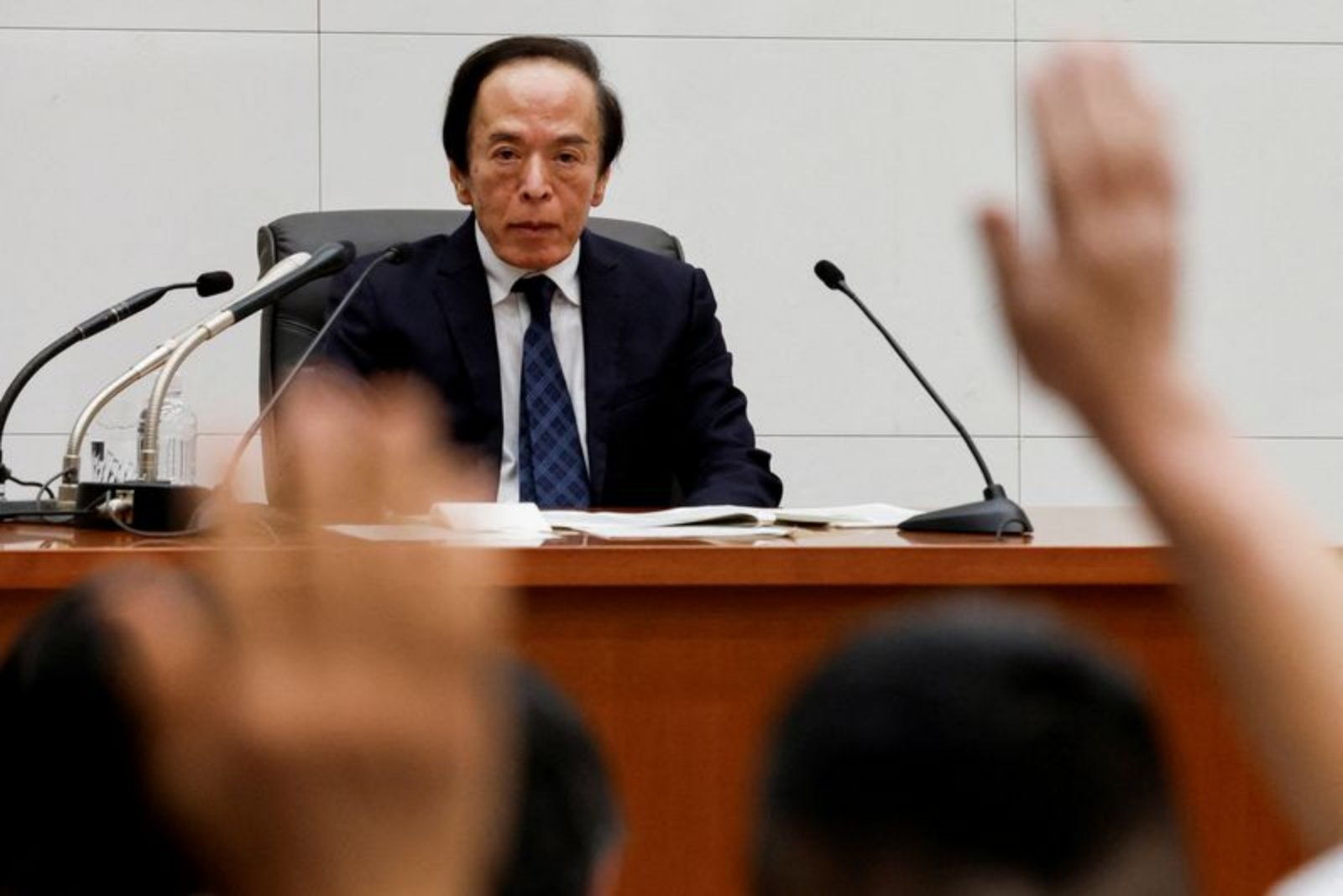
Bank of Japan Governor Kazuo Ueda said on Monday that recent economic and price developments are broadly tracking the bank's forecasts, while urging careful attention to the consequences of rising tensions in the Middle East.
In a speech read out by his deputy, Ryozo Himino, Ueda noted the fragility of global markets and the sharp increase in crude oil prices tied to the geopolitical situation. "Global financial markets are unstable and crude oil prices are rising sharply due to Middle East tensions. We must be vigilant to future developments," he said.
Ueda warned that higher crude oil prices would damage Japan's economy, and that an extended conflict in the Middle East could exert downward pressure on factory output as supply chains are disrupted. He described the potential effects on inflation as mixed: while increases in oil costs would lift energy prices in the short term, the ultimate influence on underlying inflation could move in either direction.
He expanded on that point in a direct quote: "If the output gap worsens, that could weigh on underlying inflation. On the other hand, if rising crude oil prices heighten the public's medium- and long-term inflation expectations, that could push up underlying inflation," Ueda said.
Ueda said the BOJ will maintain close surveillance of how the Middle East situation unfolds and how those developments affect the domestic economy, price trends and financial conditions. He emphasised the need to evaluate both the risks and the probability that the BOJ's baseline projections will materialise. "Give lingering uncertainty over the Middle East situation, we will scrutinise how future developments affect the economy, prices and financial conditions, as well as risks and likelihood of our baseline projections materialising," he said.
The governor's remarks underline the central bank's cautious stance amid external shocks that could complicate the path of inflation and output. Rising crude and potential supply chain interruptions were identified as channels through which the geopolitical tensions could filter into Japan's macroeconomic outlook, prompting the BOJ to monitor developments closely.
Key takeaways
- Economic and price developments are roughly following BOJ forecasts, according to Governor Ueda.
- Sharp rises in crude oil tied to Middle East tensions pose risks to Japan's economy, particularly through higher energy costs and potential supply chain disruptions that could hit factory output.
- The impact on underlying inflation is ambiguous and depends on the output gap and shifts in medium- and long-term inflation expectations.
Outlook
Ueda made clear the BOJ will closely examine how unfolding geopolitical risks alter economic indicators, inflation dynamics and financial market conditions, and will assess the implications for the likelihood of its baseline projections being realised.