
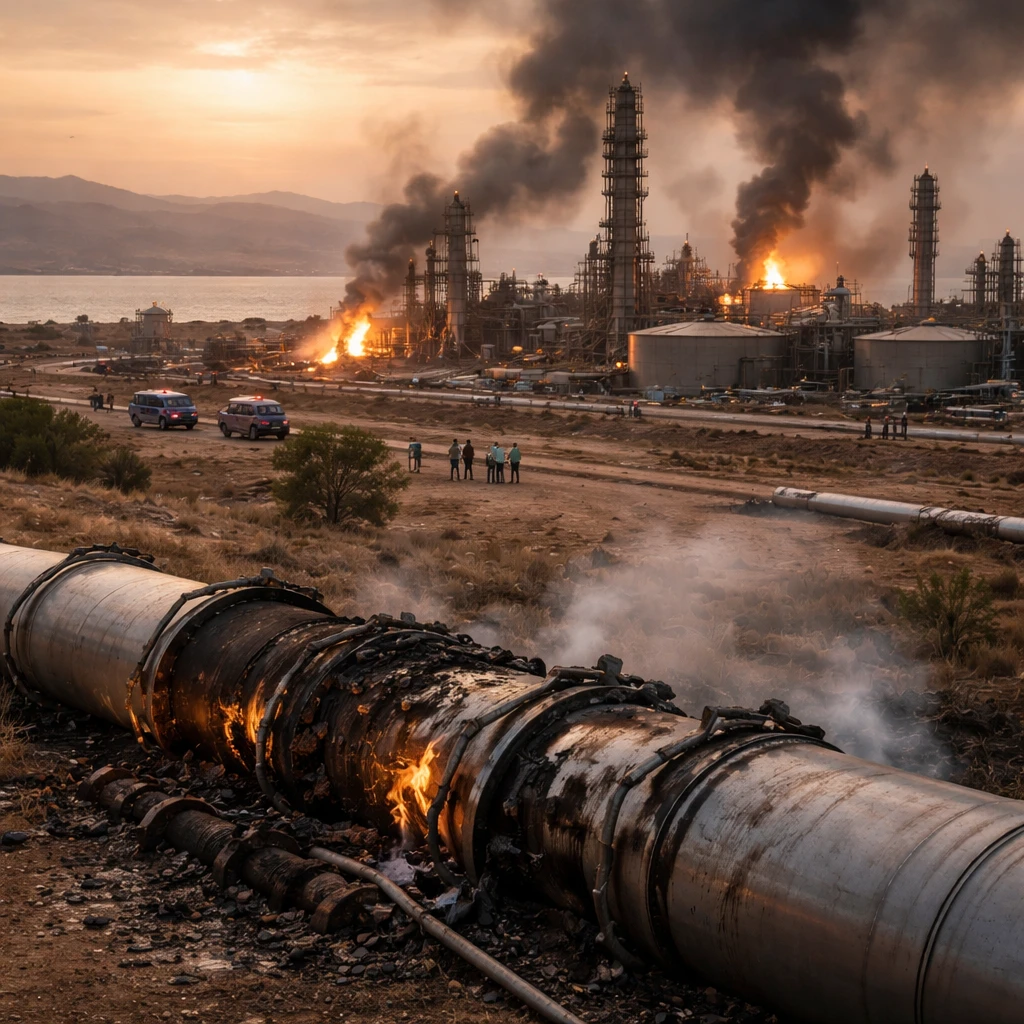
Saudi Arabia's oil production capacity has been curtailed by nearly 600,000 barrels per day after attacks targeted energy facilities, pipelines and refineries, the country's state news agency reported on Thursday. The reporting also noted that one citizen was killed in the incidents.
The stated reduction equates to less than one-tenth of Saudi Arabia's typical crude export volumes. The statement placed the recent losses on top of earlier output reductions tied to Iran's near closure of the Strait of Hormuz, an action that has blocked the principal export route used by many Gulf producers.
In response to the disruption at the Strait of Hormuz, Saudi Aramco has been routing crude through an alternate pipeline bound for the Red Sea. That alternate route came under attack this week as well. The Saudi Press Agency, citing a source in the energy ministry, reported that a strike on a pumping station on the Red Sea pipeline reduced throughput by 700,000 barrels per day.
The agency-provided figures underscore the scale of the immediate operational impact on Saudi crude flows. Officials have framed the throughput reductions in terms of capacity lost at energy infrastructure sites directly affected by the strikes.
The reporting did not provide additional operational details beyond the capacity and throughput figures, nor did it offer an updated timeline for restoration of the affected facilities or pipelines. Questions about longer-term repair schedules or broader market responses were not addressed in the state agency account.
Summary
Attacks on Saudi energy infrastructure have reduced national oil production capacity by nearly 600,000 barrels per day, with a related strike on an alternate Red Sea pipeline pumping station cutting throughput by 700,000 barrels per day. One civilian fatality was reported. The production drop represents less than one-tenth of the kingdom's usual crude exports and follows prior output impacts tied to Iran's near closure of the Strait of Hormuz.
Key points
- Nearly 600,000 barrels per day of Saudi production capacity lost after attacks on energy facilities, pipelines and refineries.
- The reduction is less than one-tenth of normal Saudi crude exports.
- Saudi Aramco diverted flows to an alternate Red Sea pipeline, which was struck this week - a pumping station hit reduced throughput by 700,000 barrels per day, per the Saudi Press Agency citing an energy ministry source.
- Sectors directly referenced or implicated include energy production, pipeline transport, and refining operations.
Risks and uncertainties
- Ongoing attacks on energy infrastructure - the article reports multiple strikes on facilities, pipelines and a pumping station, creating uncertainty for crude throughput and export capability.
- Alternate route vulnerability - the Red Sea pipeline used to bypass the Strait of Hormuz was also attacked this week, indicating risks to contingency transport routes.
- Human impact and security - at least one civilian fatality has been reported, underscoring immediate security and humanitarian concerns tied to the incidents.
The reporting provided specific capacity and throughput figures but did not include timelines for restoration, broader market effects, or further operational details beyond the numbers and the noted fatality.