
Dongguan, China - Agilian Technology spent 2025 adapting to a market reshaped by abrupt tariff moves, client requests to relocate production and measures by Beijing that both threatened and ultimately softened trade barriers. The electronics maker - which produces goods primarily for Western brands and generates more than half its revenue from U.S. orders - saw exports to its largest market immobilised for months, prompting a tactical push to create alternative production capacity abroad while reaffirming the strategic value of its Chinese base.
U.S. tariff actions intended to blunt Chinese manufacturing hit hard across sectors last year. For Agilian, the impact was immediate: customers postponed or cancelled orders, and many demanded the company set up factories outside China. The initial turmoil coincided with a general weakening in China's official purchasing managers' index (PMI) for much of the year, with April 2025 registering the weakest reading since December 2023. That slump underscored the short-term pain companies faced when trade barriers disrupted demand and logistics.
Beijing’s response - introducing export controls on certain minerals and metals critical to U.S. manufacturers - changed the dynamics by raising the stakes for American supply chains. The combination of Chinese trade measures and subsequent tariff adjustments reduced the effective burden of the levies. By March, China’s official PMI posted its fastest annual pace of growth in a year, a shift that helped firms such as Agilian recover lost ground.
For Agilian, a business with roughly $30 million in annual revenue, the disruption produced a clearer sense of what makes China difficult to replicate and what it takes to insure against future flare-ups. CEO Fabien Gaussorgues, speaking at the company’s Dongguan plant, said the tariffs depressed exports to the U.S. - which slumped 20% in 2025 - and harmed manufacturers dependent on that market. He described an operational and commercial environment in which clients alternated between seeking rapid relocation and cautious re-engagement when levies eased.
Economists and trade analysts framed the shifts as part of a broader reconfiguration of supply chains. Nick Marro, principal economist for Asia and global trade lead at the Economist Intelligence Unit, said the evidence shows Trump’s tariffs did not permanently derail China’s manufacturing momentum but did prompt a restructuring of trade relationships and supply chains. He argued the short-term levy shocks led companies and governments to rearrange trade linkages rather than abandon them outright.
Official Chinese trade figures reflected those distortions. For the first two months of 2026, the country’s trade surplus rose to $213.6 billion from $169.21 billion a year earlier. Over 2025 as a whole, China expanded its trade surplus by about a fifth to a record $1.2 trillion - a figure noted in the industry as being equivalent to the GDP of the Netherlands. Those headline numbers coincided with sectoral pain: exports to the United States fell sharply, creating acute challenges for manufacturers whose sales and supply chains were U.S.-centric.
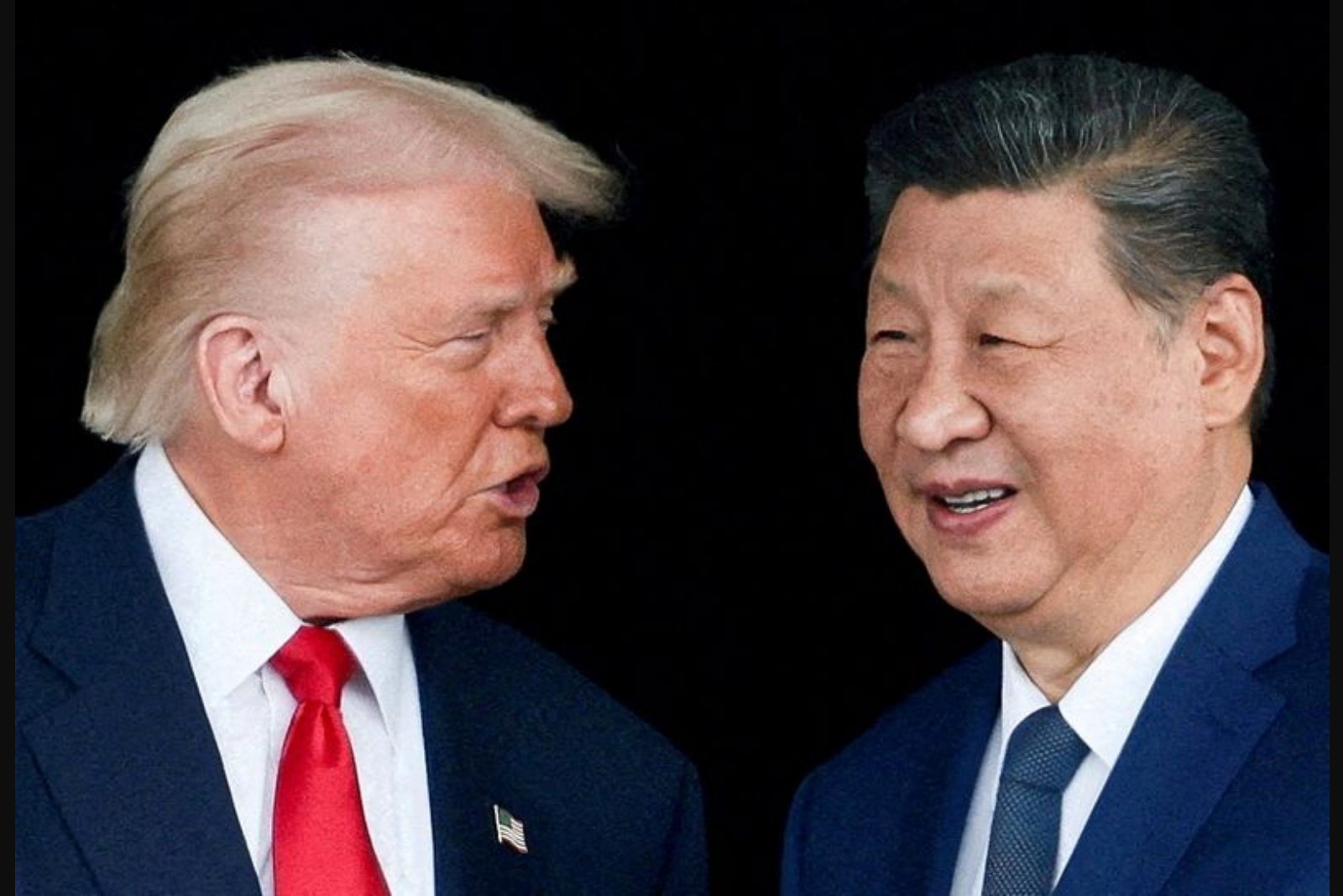
Whether that pattern will change was an open question heading into a high-profile diplomatic moment - a planned U.S. presidential visit to China in May. At the factory, Gaussorgues and others wondered if the trip would produce a breakthrough, or at least a stabilising framework. Marro argued the most likely outcome would be a pledge to continue talks and possibly a framework to keep trade tensions from reaching the scale of disruption seen the previous year. China’s Ministry of Commerce spokesperson He Yadong urged both sides to implement previous agreements and follow-up talks. Consulting executive Denis Depoux of Roland Berger described China’s leverage in rare earths as a ‘‘nuclear weapon of trade," a blunt characterisation of the market power embedded in specific material supply chains.
Preparing for the worst became a practical exercise for Agilian long before tariffs jumped to their peak. In 2024, as political risk rose with a U.S. presidential campaign shift, many of Agilian’s customers requested shipments to North American warehouses to pre-position inventory. Those moves pushed up storage costs significantly, which the company’s vice-president, Renaud Anjoran, described as storage prices going "crazy."
After the election, agitation intensified. Anjoran said the company faced frequent late-night calls from "panicked" clients asking for contingency plans. One buyer, citing family ties in Penang, Malaysia, urged Agilian to put production there. The firm had already created a legal entity in India, but many clients remained sceptical about India because they expected slower ramp-up times and customs delays. "India takes time," Gaussorgues said, noting that it took the company a year to establish an official presence there.
The early months after the new U.S. administration took office included further tariff hikes. Two increases totalling 20% worried clients but did not trigger wholesale departures. Then, on April 2, an additional rise of 34 percentage points caused more acute disruption: customers called it a disaster and many cancelled orders. Agilian’s 12,000-square-metre (130,000-square-foot) Dongguan factory filled with pallets of unsent goods as business stalled. China responded with its own measures, and by the end of that month levies had escalated beyond 100% on both sides of the Pacific. "Things were frozen," Anjoran said of that period.
Faced with immobilised shipments and mounting client pressure, Agilian chose Penang as its primary contingency location and secured a local partner factory. The site was attractive in part because it lies away from the South China Sea, an area where military tensions could not be ruled out. The company also explored Dharwad, India, looking at industrial space and potential product lines, and even considered moving production to the United States. Yet the U.S. option proved difficult: local supply chains were incomplete, the company would remain dependent on tariffed Chinese components, and labour costs were higher.
By mid-2025 Agilian’s India team had identified a 4,000-square-metre building and was assessing which products could be manufactured there. The prospect of near-total embargo-like conditions with China made India a more acceptable alternative for some clients. But a diplomatic turn in May - a Washington-Beijing deal - removed most of the tariffs imposed on China, reducing immediate pressure to relocate. In August, however, another tariff move hit India when the U.S. increased levies there by 50% in an effort to influence its energy purchases. That action complicated the Dharwad timeline, but it did not end Agilian’s plans.
"We want to be a multi-country manufacturer. Focus on the long arc of time," Anjoran said as pre-production runs started in Penang in mid-2025. Those runs reinforced a common industry refrain: achieving Chinese-like speed and efficiency elsewhere is difficult. The team learned that "everything takes way, way, longer" outside China when establishing processes, quality control and logistics.
Across the summer and into the autumn, China’s export controls highlighted U.S. reliance on materials processed largely in China, applying pressure to sectors including autos and defence. An October meeting between the U.S. president and China’s president led to a modest reduction - tariffs were cut by 10 percentage points - and client enquiries about levies and offshoring diminished. For Agilian, the latter half of 2025 became its busiest period on record in terms of production hours, rising 29% from the first half as orders unfroze and new bookings arrived.
Executives say the company will continue to develop manufacturing footprint in India and Malaysia as an insurance policy, while recognising that competitive Chinese components - cheaper and of improving quality - make Dongguan an indispensable centre. Gaussorgues expressed a cautious growth target - aiming to lift revenue by 30% over the next three years - while acknowledging the persistent risk of renewed policy shocks. "I started in January saying, okay, this might be a good year and then the Iran war started," he said, underscoring how geopolitical events can upend business plans even amid a recovery.
Agilian’s experience illustrates a recurring theme for electronics suppliers: diversification and contingency planning are costly and slow, and full replication of China’s manufacturing ecosystem remains challenging. The company’s strategy - to keep investing in alternative locations while leveraging China’s scale and component supply - is a pragmatic attempt to balance immediate competitiveness with long-term resilience in an uncertain trade landscape.