
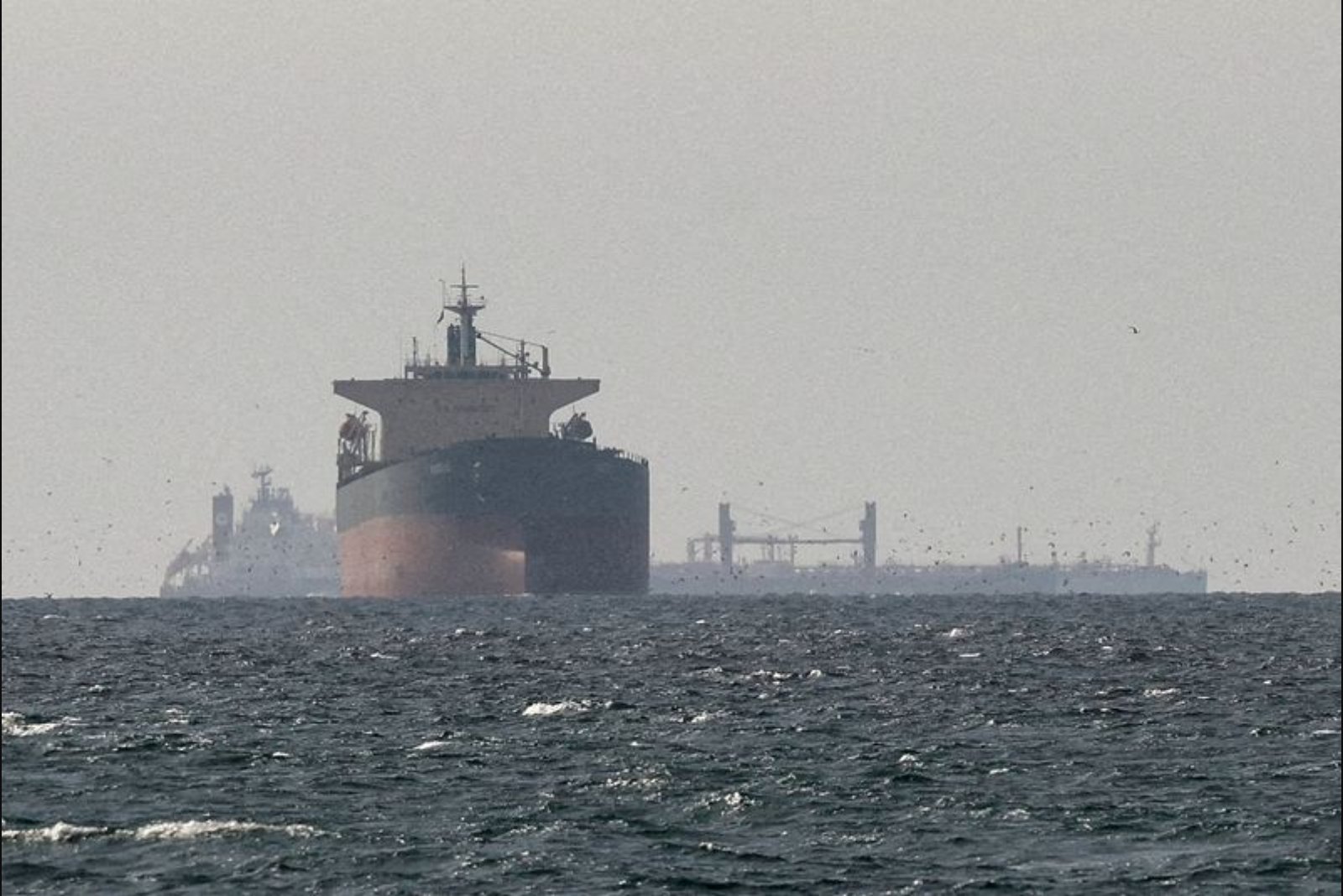
The U.S. military has ordered a blockade on vessels entering or leaving Iranian ports, effective at 10 a.m. ET (1400 GMT) on Monday, a step that would stop roughly two million barrels per day of Iranian oil from moving into global markets and tighten supply.
Officials said the restriction applies specifically to ships bound for or departing from Iran, including all Iranian ports on the Persian Gulf and the Gulf of Oman. U.S. Central Command stated that freedom of navigation will not be impeded for vessels transiting the Strait of Hormuz to and from non-Iranian ports, and that more details would be released.
The announcement came after weekend negotiations in Islamabad between U.S. and Iranian counterparts failed to produce an agreement. President Donald Trump said the U.S. Navy "will begin the process of BLOCKADING any and all ships trying to enter, or leave, the Strait of Hormuz." Iran’s Revolutionary Guards responded by warning that military vessels approaching the strait would be treated as a breach of the ceasefire and would be dealt with "harshly and decisively."
Security concerns were amplified by commentary from retired Admiral Gary Roughead, a former chief of U.S. naval operations, who cautioned that Iran might fire on ships in the Gulf or attack infrastructure in Gulf states that host U.S. forces.
Implications for oil flows
Blocking exports from Iran would sever a sizeable source of crude supply. Kpler tracking data showed Iran exported 1.84 million barrels per day (bpd) of crude in March and had shipped 1.71 million bpd thus far in April. Those volumes compare with a 2025 full-year average of 1.68 million bpd, according to Kpler.
Prior to the outbreak of hostilities on February 28, Iranian output had surged, leaving near-record volumes of Iranian oil already loaded on ships. Kpler reported that more than 180 million barrels of Iranian crude were floating on tankers as of earlier this month.
Other Gulf flows and tanker movements
Shipping through the Strait of Hormuz has been severely curtailed by an Iranian blockade since the start of the war, and traffic remained nearly halted despite the two-week ceasefire agreement between Washington and Tehran reached last week. On Monday many oil tankers were steering clear of the strait.
Ship tracking data show recent vessel movements that illustrate the narrow and cautious nature of current navigation in the region. On Sunday two Pakistan-flagged tankers, the Shalamar and Khairpur, entered the Gulf to load cargoes from the United Arab Emirates and Kuwait. A Liberia-flagged very large crude carrier (VLCC), the Mombasa B, transited the strait earlier on Sunday and was ballasting in the Gulf.
Another VLCC, the Malta-flagged Agios Fanourios I, attempted to pass through the strait on Sunday to pick up Iraqi crude destined for Vietnam but turned back and remained anchored near the Gulf of Oman. On Saturday three fully loaded supertankers passed through the Strait of Hormuz in what appeared to be the first vessels to exit the Gulf since the U.S.-Iran ceasefire deal.
Kpler reported that as of last Tuesday some 187 laden tankers carrying 172 million barrels of crude oil and refined products were inside the Gulf.
Which importers face the biggest disruption?
Prior to the war, the majority of Iranian oil exports were shipped to China, the world's largest crude importer. The U.S. last month issued a sanctions waiver that allowed other buyers, including India, to resume imports of Iranian oil.
Ship tracking data from LSEG and Kpler indicated India is set to receive its first crude shipment from Iran in seven years this week. Before hostilities began, approximately 20% of global oil and natural gas exports were routed through the Strait of Hormuz, with the bulk of cargoes bound for Asian markets.
What remains uncertain
The details on how the blockade will be enforced and how long restrictions will last were not specified beyond the initial announcement. Authorities said freedom of navigation for vessels transiting to and from non-Iranian ports would not be impeded, but Iran’s warnings and the potential for confrontations at sea introduce uncertainty for tanker operators, shippers and importing nations.
This operation follows failed diplomacy and comes amid already elevated inventories of Iranian oil on tankers, creating a complex picture for markets assessing near-term supply availability.
Reporting focuses on the declared measures, known tanker movements and Kpler and LSEG tracking figures as provided by official statements and ship tracking data.