
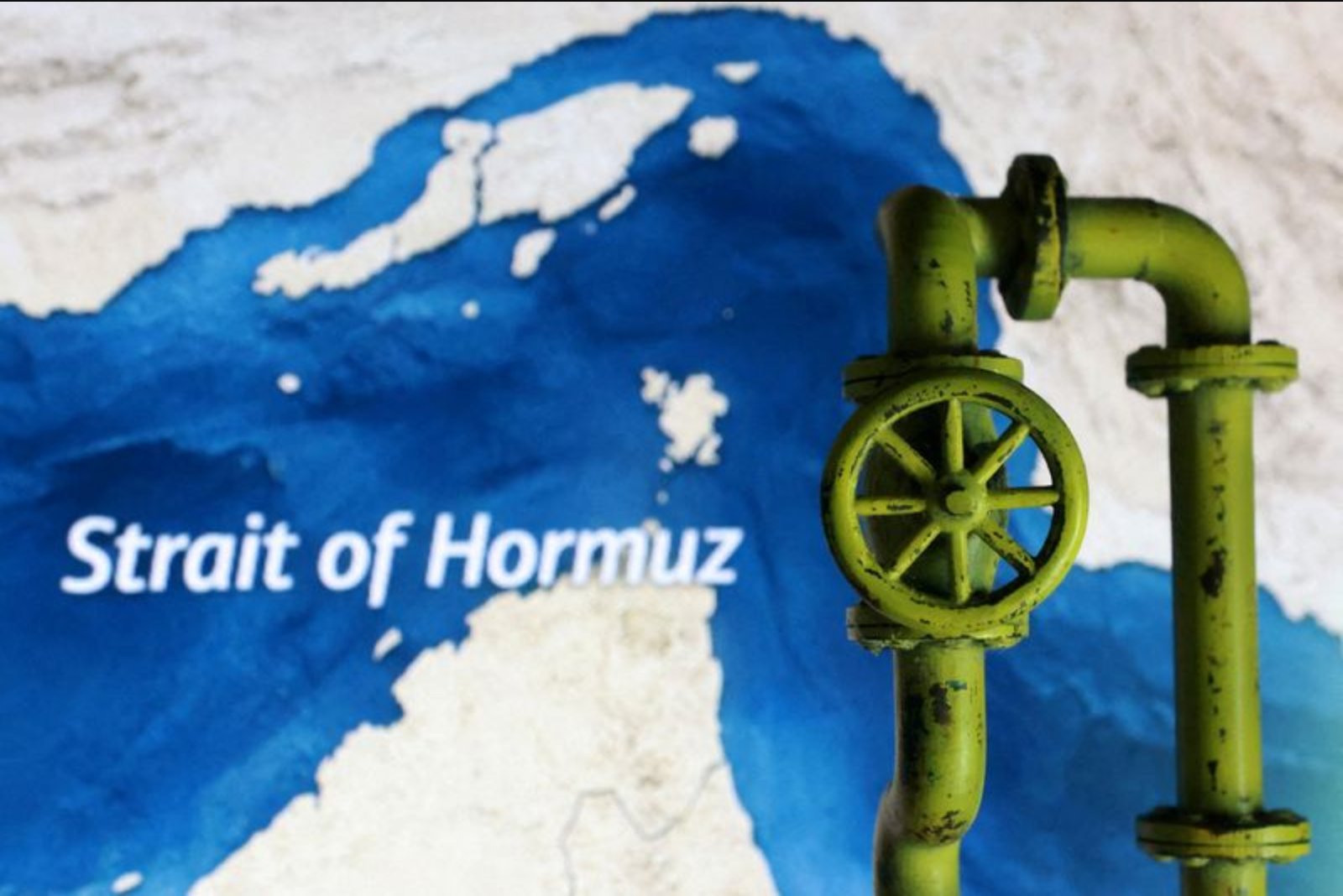
Oil tankers and other commercial vessels were observed avoiding passage through the Strait of Hormuz on Sunday ahead of the scheduled implementation of a U.S. naval blockade, according to shipping movement data reviewed by reporters.
The announcement by the U.S. came after weekend negotiations with Iran failed to produce a deal to extend a tentative ceasefire. President Donald Trump said the U.S. Navy would begin blockading the Strait of Hormuz. U.S. Central Command subsequently issued a statement saying U.S. forces would start enforcing a blockade of all maritime traffic entering and exiting Iranian ports at 10 a.m. ET (1400 GMT) on Monday.
The Central Command statement said the blockade would be "enforced impartially against vessels of all nations entering or departing Iranian ports and coastal areas, including all Iranian ports on the Arabian Gulf and Gulf of Oman." The statement also said U.S. forces would not impede freedom of navigation for vessels transiting the Strait of Hormuz to and from non-Iranian ports, and that additional information for commercial mariners would be provided through a formal notice prior to the blockade’s start.
Iran’s Revolutionary Guards issued its own warning on Sunday, saying any military vessels attempting to approach the Strait of Hormuz would be regarded as a violation of the ceasefire and "be dealt with harshly and decisively."
Shipping data from vessel-tracking services showed several specific vessel movements on Sunday. Two Pakistan-flagged tankers, the Aframax Shalamar and the Panamax Khairpur, entered the Gulf. The Shalamar was recorded as heading to the United Arab Emirates on Monday to load Das crude, while the Khairpur was listed as bound for Kuwait to load refined products.
Pakistan National Shipping, the manager of the Shalamar, did not immediately respond to a request for comment outside office hours.
A Liberia-flagged very large crude carrier (VLCC), the Mombasa B, also transited the strait earlier on Sunday and was shown ballasting in the Gulf. The Malta-flagged VLCC Agios Fanourios I attempted to pass through the strait on Sunday en route to the Gulf to load Iraqi Basra crude for Vietnam but then turned back; it was later anchored near the Gulf of Oman and is planning to head to Iraq, according to the data.
Eastern Mediterranean Maritime, which manages the Agios Fanourios I, and CMB.TECH NV, the manager for the Mombasa B, did not respond to requests for comment outside office hours.
Despite the diplomatic stalemate and the planned blockade, shipping records indicated that three fully laden supertankers passed through the Strait of Hormuz on Saturday. Those vessels appeared to be the first to exit the Gulf since the ceasefire deal was reached last week.
The situation remains fluid pending the formal notice to mariners and the start of the blockade at the stated time. Commercial operators and national managers of tankers featured in the movements did not provide comment in the hours after the reported transits and route changes.