
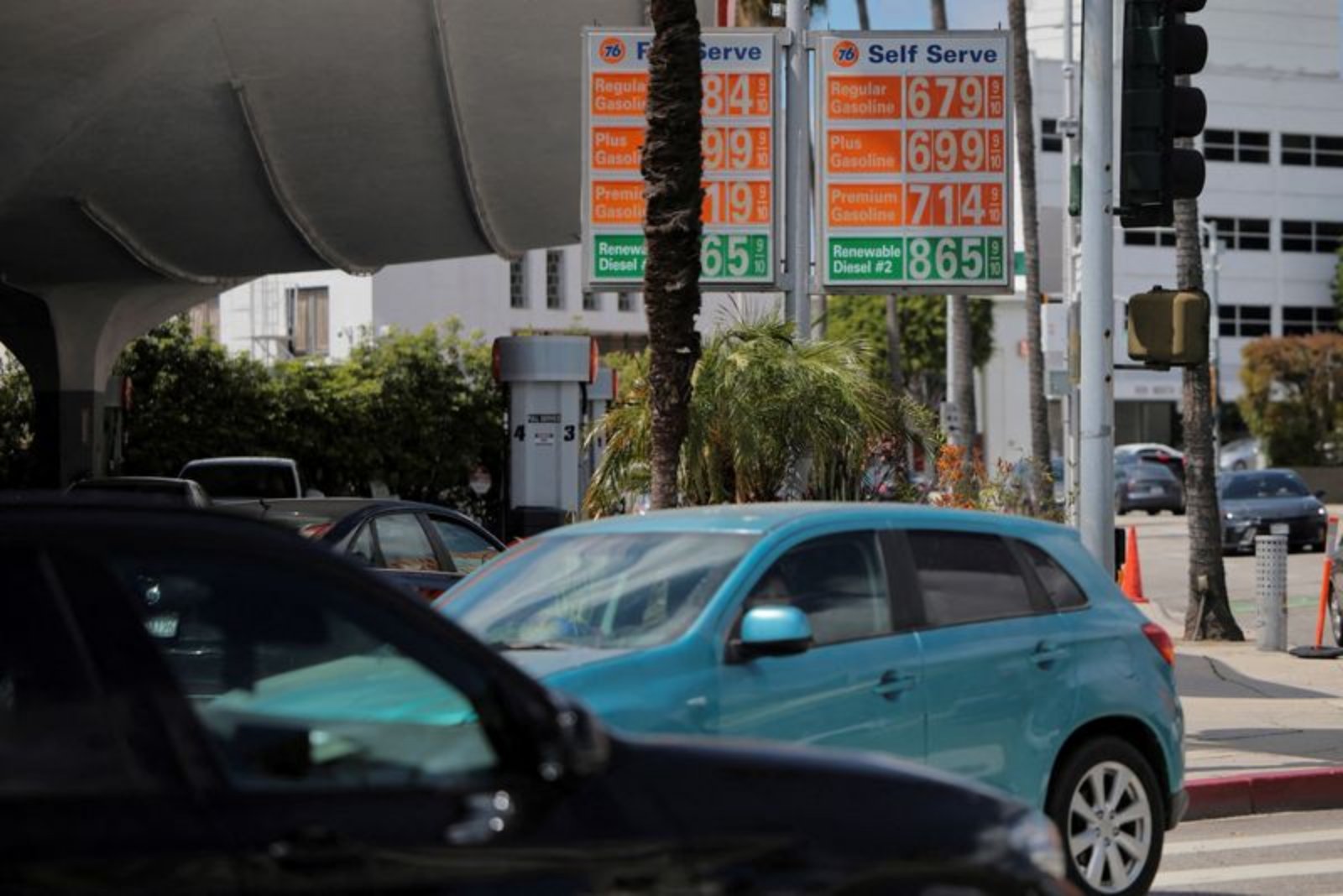
U.S. consumers are likely to face persistently high fuel costs through the summer travel season even after a sharp drop in wholesale prices following a two-week ceasefire announcement, several market observers said. The ceasefire - announced by President Donald Trump earlier this week in the context of the U.S.-Israeli war on Iran - spurred steep intraday declines in crude and refined product futures, but analysts caution that a range of operational and market frictions will keep retail prices elevated.
After the announcement on Tuesday, U.S. crude oil futures fell by nearly $20 and futures for gasoline and diesel also moved sharply lower as traders reacted to the possibility the Strait of Hormuz could reopen. But those moves in futures markets are unlikely to translate into immediate relief at filling stations because retailers are running through higher-cost inventory and because the ceasefire remains fragile, said market participants.
Evidence of that fragility was visible soon after the ceasefire was announced. The Strait of Hormuz remained closed on Wednesday after Israel launched its biggest attacks yet on Lebanon, and Iran struck a pipeline that Saudi Arabia had been using to bypass the Hormuz chokepoint. Such developments have left traders and fuel sellers cautious about lowering prices quickly.
"There’s so much uncertainty still around what this ceasefire means, and when and how fuel starts to flow through the Strait of Hormuz again, retailers are not going to drop prices sharply in the face of those unknowns," said Shon Hiatt, director of the Zage Business of Energy Initiative at the USC Marshall School of Business. Hiatt added that retail prices tend to climb faster than they fall because sellers must work through costly inventory and require a clearer view of future supply to avoid losses.
Hiatt summarized the dynamic succinctly: "Prices go up like a rocket, and they fall like a feather." That asymmetry in retail pricing helps explain why a near-term fall in futures does not automatically translate into large declines at the pump.
Data from consumer fuel tracker GasBuddy showed U.S. retail gasoline eased only a penny to $4.16 a gallon by mid-day Wednesday, down from a near four-year high of $4.17 a gallon on Tuesday. GasBuddy analyst Patrick De Haan said that if conditions froze immediately, the national average could decline by 5 to 10 cents a gallon within a week. Even so, as of Tuesday pump prices remained nearly a dollar higher than the same time last year, according to GasBuddy data.
Diesel markets remain particularly strained. U.S. average retail diesel prices climbed to $5.67 a gallon on Wednesday, the highest level since July 2022 and roughly 60% above last year’s average. Market strategists warn that diesel and jet fuel supplies are tighter than other refined products, and that the Middle East supplies both the fuels and crude grades that yield relatively large amounts of these products in refining.
"Markets still will be elevated throughout the rest of the year with an elevated geopolitical risk premium," said Alex Hodes, director of energy market strategy at StoneX. Hodes and Hiatt both pointed to the vulnerability of diesel and jet fuel supplies due to the region’s role in providing those products and the crude grades that produce them.
In futures trading, the moves were notable but left prices well above pre-war levels. U.S. gasoline futures were down about 9% intraday, while diesel futures fell more than 14%. Both product futures remained roughly a dollar higher than before the onset of the war. At the time, gasoline futures were trading around $3.01 a gallon and diesel futures near $3.83 a gallon.
The combination of elevated insurance costs for ships and continued reluctance by vessel operators to transit the Strait of Hormuz is another factor keeping prices up, market participants said. "That remaining risk premium is a reminder that the vast majority of vessels still aren’t transiting the strait of Hormuz as the cease fire plans still need to trickle down to the folks launching the attacks," wrote the trading desk at U.S. fuel distributor TACenergy.
Fuel prices have become a politically sensitive issue. High costs tied to Iran’s blockade of the Strait of Hormuz have emerged as a major concern for President Trump and the Republican Party as they seek to maintain control of the U.S. Congress in the midterm elections this November. The war pushed gasoline and diesel to their highest levels in years, and the resulting economic pressure contributed to a drop in the president’s approval ratings to their lowest point since his return to the White House.
For consumers, the practical result is likely to be limited immediate relief at the pump despite volatility in wholesale markets. For markets, the combination of damaged infrastructure in the region, ongoing attacks, higher insurance and shipping costs, and tighter supplies of diesel and jet fuel point to an elevated geopolitical risk premium that could sustain higher prices through the peak travel season and beyond, analysts said.
Key points
- Wholesale crude and fuel futures fell sharply after a two-week ceasefire announcement, but retail fuel prices have shown only minimal immediate declines.
- Diesel and jet fuel markets face particular strain because of tighter supplies and the Middle East’s role in providing these products and the crude grades that yield them.
- Higher insurance and shipping hesitancy around the Strait of Hormuz sustain an elevated geopolitical risk premium, keeping prices above pre-war levels.
Risks and uncertainties
- Ceasefire durability - Recent attacks, a closed Strait of Hormuz and a struck pipeline indicate the truce is fragile and that supply disruptions could persist, affecting fuel markets and shipping.
- Insurance and transit risk - Elevated insurance costs and continued reluctance of vessels to transit the waterway could maintain higher logistical costs for fuel distribution.
- Inventory and pricing dynamics - Retailers’ need to work through higher-priced inventory and their cautious pricing stance could delay pass-through of lower wholesale prices to consumers.