
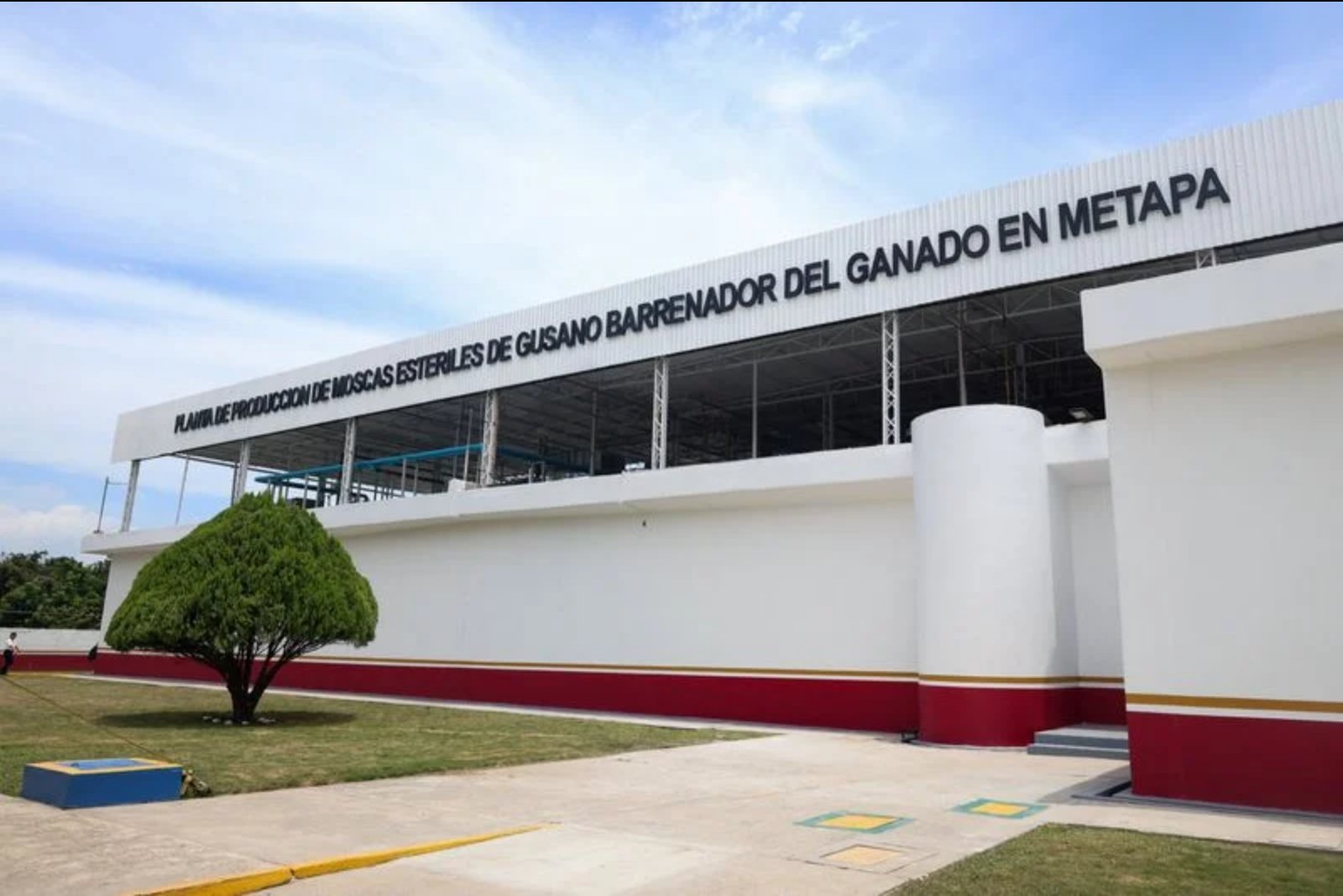
Senior officials from Mexico and the United States gathered in Metapa de Dominguez, in southern Chiapas near the Guatemala border, on Saturday to open a sterile fly production facility intended to bolster efforts against the New World screwworm. The plant, a bilateral project with a price tag in excess of $50 million, is planned to scale up to produce as many as 100 million sterile flies each week for release against wild screwworm populations.
The parasite, which burrows into the flesh of warm-blooded animals and can be fatal if left untreated, has crossed borders in the current outbreak. Mexico confirmed its first case in November 2024, and the outbreak subsequently moved northward, with the first U.S. cases in decades reported in early June in Texas. The outbreak has since forced policy changes and market disruptions on both sides of the border.
Plant objectives and limitations
The new plant is intended to increase the availability of sterile flies for release. Officials said the facility will eventually reach production levels of up to 100 million sterile insects per week. That output is framed as a significant addition to existing capacity, including that produced by a COPEG plant in Panama which has been operating at roughly 100 million flies per week.
Despite the added capacity, experts quoted by officials caution that even with the new output the overall supply of sterile flies is expected to be insufficient to fully eradicate the pest. The facility’s launch therefore represents a major step in the response but does not, by itself, guarantee eradication of the screwworm.
Political and official remarks
Mexican President Claudia Sheinbaum and U.S. Agriculture Secretary Brooke Rollins attended the opening. Secretary Rollins said, "Our countries have beaten this before, 40, 50 years ago. We will beat the New World screwworm again sooner than anyone would have thought because of the extraordinary work that is going to happen at this facility." President Sheinbaum emphasized cross-border cooperation, saying, "Animal diseases, pests and the challenges of food safety aren’t limited by borders. In the face of those challenges, the best response is to team up, share our experiences and build solutions together."
Trade impacts and market shifts
Governments have responded to the outbreak with trade restrictions that have reshaped regional cattle flows. Since May 2025 the United States has kept its border largely closed to Mexican live cattle, a restriction on a trade that previously supplied more than 1 million animals each year to U.S. feedlots. The closure has tightened cattle supplies in Texas, contributing to some feedlots running with empty pens and putting pressure on already historically tight cattle inventories.
The trade pause has also prompted structural changes inside Mexico. Ranchers who formerly exported live animals north have increasingly chosen to fatten and process cattle domestically, investing in additional feedlot and slaughter capacity. With fewer live exports, Mexico increased shipments of processed beef to the United States in 2026.
Timeline and regional coordination
Warnings that screwworm was moving northward date back to 2023, according to regional monitoring by the Panama-United States Commission for the Eradication and Prevention of Screwworm (COPEG). Nevertheless, Mexico and the United States did not announce plans to build sterile fly facilities until 2025. The United States is also constructing a sterile fly plant in Texas.
COPEG’s Panama plant has been producing at capacity and its sterile flies have most recently been released along the U.S.-Mexico border near Texas. The Chiapas facility is expected to double the number of insects available for release beyond what is being produced in Panama, but officials and experts alike note that the additional output may not be enough to eliminate the pest entirely.
More than 30,000 animals have been infected in Mexico during the outbreak, according to figures cited by officials. The cross-border nature of the problem, combined with production limits and disrupted trade flows, underscores the challenge confronting livestock producers and regulators on both sides of the border.