
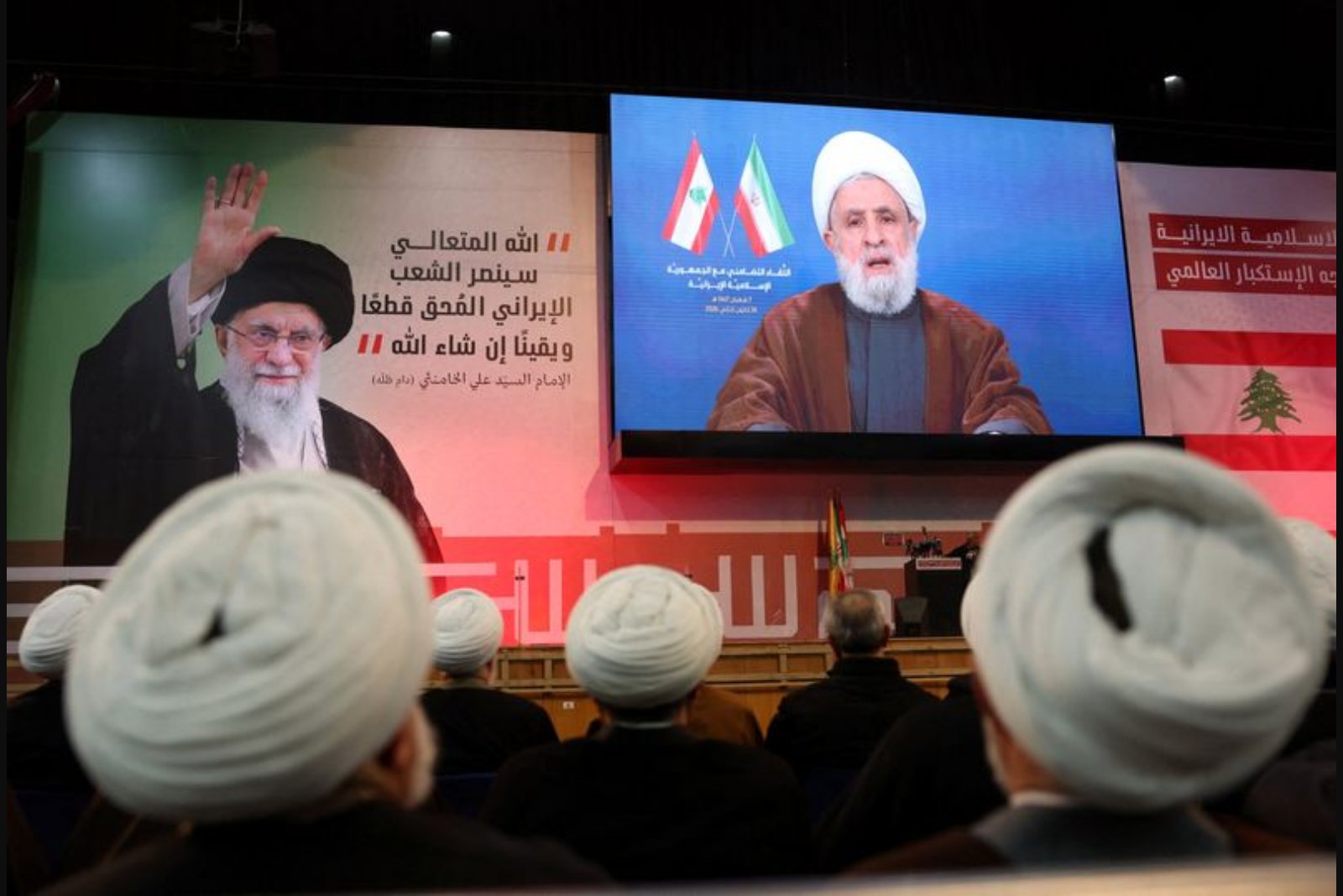
Israel announced on April 9 that an overnight strike in Beirut killed Naim Qassem, whom the Lebanese Shi'ite armed group Hezbollah had appointed leader roughly one month after the killing of his predecessor. The Israeli statement said the strike took place on the night before the announcement. Hezbollah has not been reported to have officially confirmed Qassem's death, and the claim remains contingent on such confirmation.
Officials described Qassem as a senior figure who had been elevated to lead the group after the death of the veteran commander Hassan Nasrallah in 2024. Nasrallah himself was killed in an airstrike on a Beirut suburb in 2024, a culminating event in a conflict that began when Hezbollah fired on Israeli positions along the border in support of the Palestinian Islamist militant group Hamas.
The Israeli statement framed Qassem's reported death as a significant blow to Hezbollah and to Tehran, identifying Hezbollah as one of Iran's main regional allies. The group formally entered the wider regional war on March 2 by attacking Israel, an action the announcement ties to a sequence of events that began two days after the United States and Israel commenced airstrikes against Iran. The statement also referenced the killing of Iran's Supreme Leader Ali Khamenei on the first day of the war as a prior catalyst that preceded Hezbollah's attack on Israel.
Since the Gaza conflict escalated on October 7, 2023, Israel says it has weakened Hezbollah's military capabilities with a campaign that included targeted killings. The latest claim of Qassem's death follows a period in which Israel said it has carried out airstrikes that have resulted in more than a thousand fatalities. Even after a U.S.-backed ceasefire between Israel and Lebanon in 2024 that halted more than a year of intense fighting, Israel continued to conduct strikes in Lebanon against targets it identified as linked to Hezbollah, citing concerns the group was seeking to rearm.
Hezbollah, according to the Israeli account, refused a U.S. proposal aimed at extending the ceasefire that included disarmament. Qassem reportedly issued direct threats against Israel, warning that missiles would be launched at Israel if it were to resume a broad war on Lebanon.
Key points
- Israel announced on April 9 that it killed Naim Qassem in an overnight strike in Beirut - the claim awaits confirmation from Hezbollah.
- The reported death would be a major setback for Hezbollah and for Iran, with the group having formally entered the regional conflict on March 2 following earlier airstrikes involving the United States and Israel.
- Ongoing military operations since October 7, 2023 - including targeted killings and airstrikes - have, according to Israel, degraded Hezbollah's capabilities and led to substantial casualties; sectors such as defense and regional markets may be sensitive to developments in the conflict.
Risks and uncertainties
- Confirmation risk - the Israeli claim that Qassem was killed remains to be confirmed by Hezbollah.
- Escalation risk - the record of cross-border attacks and public threats by Hezbollah in the course of the recent fighting creates uncertainty about potential retaliatory actions.
- Operational continuity - despite a U.S.-backed ceasefire in 2024, regular strikes identified by Israel as targeting Hezbollah elements have continued, leaving the situation subject to further military action and disruption.
The available information lays out a sequence of actions and counteractions: airstrikes by the United States and Israel, Hezbollah's engagement against Israel on March 2, public threats by Qassem, and a pattern of strikes and targeted killings attributed by Israel to efforts to blunt Hezbollah's capabilities. The immediate factual questions include whether Hezbollah will acknowledge Qassem's death and how the group will respond to this reported loss of leadership.