
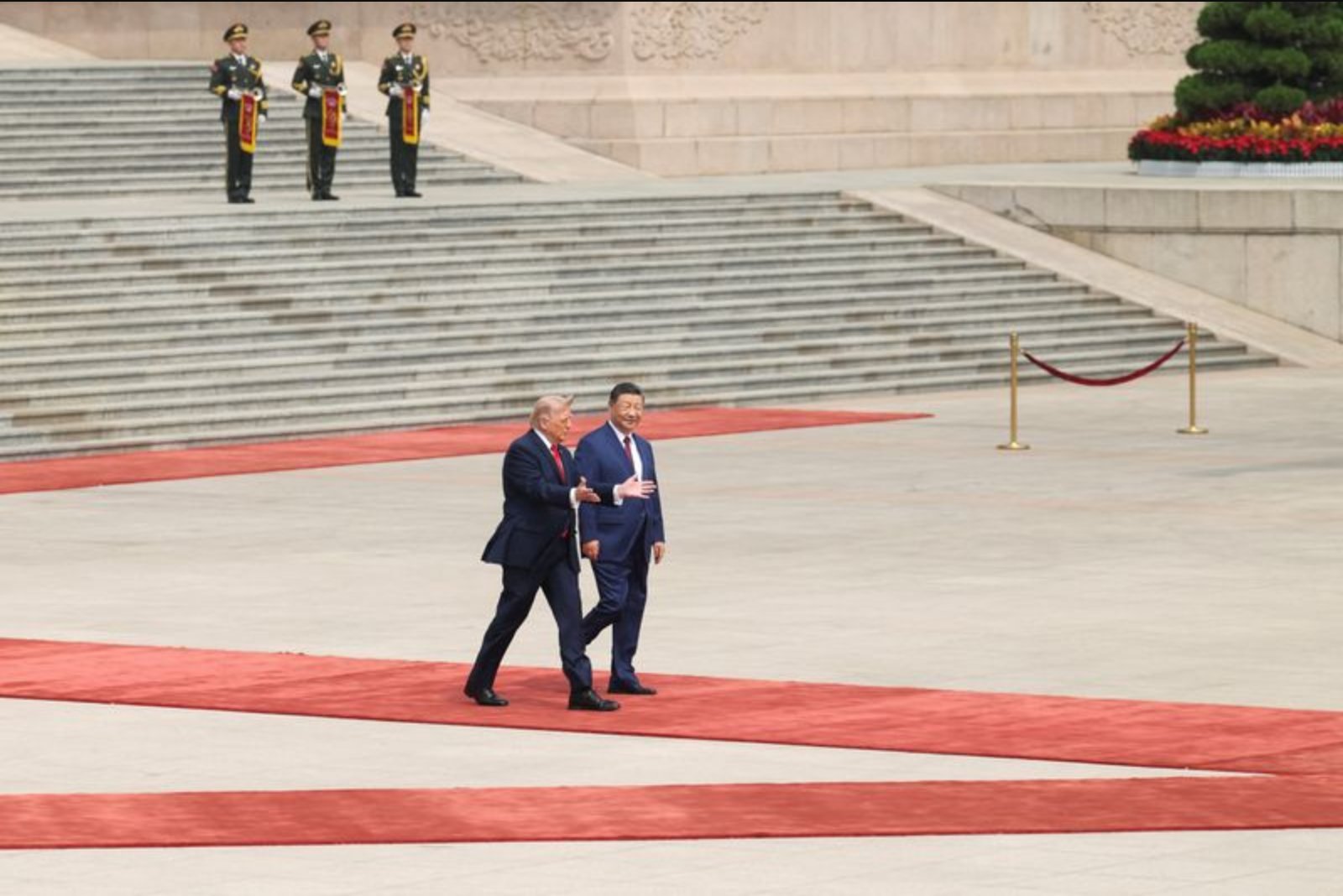
U.S. President Donald Trump is expected to press China to play a stronger role in persuading Iran to step back from hostilities during talks with President Xi Jinping in Beijing, according to U.S. officials and public statements. The subject of the war between the U.S.-Israeli coalition and Iran is overshadowing the first presidential visit to China since 2017, and comes as diplomatic efforts have so far failed to convert a precarious ceasefire into a durable settlement.
More than a month after a tenuous ceasefire took hold, negotiators have not advanced a political resolution to a conflict that has resulted in thousands of deaths, altered strategic relationships across the Middle East and driven up prices for oil and other commodities used around the world. Washington is urging Iran to abandon its nuclear programme and to end what U.S. officials call Tehran’s chokehold on the Strait of Hormuz - a crucial maritime passage that, before the outbreak of war on February 28, carried roughly 20% of the world’s oil and liquefied natural gas.
Tehran, for its part, has set out its own conditions: compensation for wartime damage, an end to the U.S. blockade of Iranian ports and cessation of combat on all fronts, including in Lebanon where Israel is engaged with Iran-backed Hezbollah. The U.S. president has dismissed Iran’s demands as "garbage."
The White House aims to use the Beijing meeting to underline to China that continued support for Iran would harm Sino-American relations, an argument U.S. Secretary of State Marco Rubio reiterated in an interview. "The United States hopes to convince China 'to play a more active role in getting Iran to walk away from what they’re doing now and trying to do now in the Persian Gulf,'" Rubio said on Fox News’ "Hannity" programme, in remarks released on Wednesday. He added that Washington has made clear any support for Iran would be detrimental to the bilateral relationship and said the subject would surface in trade conversations. The interview took place on board Air Force One en route to China.
U.S. and Chinese senior officials agreed last month that no country should be able to impose tolls on traffic through the region, according to a statement from the U.S. administration. China did not dispute that account. Yet incidents at sea are continuing: ship-tracking data showed that a Chinese supertanker carrying 2 million barrels of Iraqi crude sailed through the Strait of Hormuz on Wednesday, the third known transit by a Chinese oil tanker since the war began. The data also indicated that a Panama-flagged crude oil tanker managed by Japanese refining group Eneos has passed through the strait, the second instance of a Japan-linked ship doing so since hostilities started.
Observers say other countries are exploring shipping arrangements similar to those Tehran has struck with Iraq and Pakistan, moves that could deepen Iran’s practical control over a waterway that normally channels fertilisers, petrochemicals and a broad range of bulk commodities essential to global supply chains.
The conflict has accelerated geopolitical realignment in the Gulf. New reports highlight shifts in regional ties. Israel said Prime Minister Benjamin Netanyahu secretly visited the UAE in March, holding talks with Sheikh Mohammed bin Zayed that Israel described as producing a "historic breakthrough" in relations between the two. The governments had restored ties in 2020 under the Trump-era Abraham Accords, and Israel said the relationship has strengthened since the UAE experienced Iranian strikes.
The UAE’s foreign ministry denied the reported visit, calling any claims of unannounced trips or undisclosed arrangements "entirely unfounded." Iran, which has struck the UAE more than its other Gulf neighbours in response to U.S.-Israeli attacks, warned the Emiratis against becoming an enemy. Foreign Minister Abbas Araqchi wrote on X that "Enmity with the Great People of Iran is a foolish gamble. Collusion with Israel in doing so: unforgivable. Those colluding with Israel to sow division will be held to account."
At the same time, Reuters reported that Saudi fighter jets bombed Iran-backed militias in Iraq, and that retaliatory strikes have been launched from Kuwait into Iraq, part of a wider pattern of military responses by Gulf states during the war that have remained largely out of the public eye.
Back in Washington, Vice President JD Vance said he believed negotiations to end the war were making progress, while tying any acceptable advance to the president’s red line. "The fundamental question is, do we make enough progress that we satisfy the president’s red line?" Vance told reporters at the White House. "And the red line is very simple. He needs to feel confident that we put a number of protections in place such that Iran will never have a nuclear weapon." Iran maintains it is not seeking nuclear weapons.
The war’s impact on energy markets and inflation is feeding into domestic politics. Trump’s visit to China takes place amid concerns that higher consumer prices could affect voter sentiment in the run-up to November’s midterm elections, with the conflict seen as a contributing factor to rising energy costs. Washington is seeking Beijing’s cooperation in pressuring Tehran, even as China remains a close partner of Iran and a major purchaser of Iranian oil.
Amid the diplomatic and military manoeuvring, shipping patterns in the Gulf are shifting and the security of crucial maritime chokepoints remains uncertain. Those changes are already affecting flows of crude oil, liquefied natural gas and other commodities tied to global manufacturing and food supply chains, raising questions about short- and medium-term disruptions to trade and to prices for end users worldwide.
Separately, embedded content in some reports referenced a stock ticker labeled 5020 and posed a promotional question about its valuation, suggesting a Fair Value calculator could assess whether it is a bargain. The same material described a tool that uses multiple valuation models. That material appeared alongside coverage of the conflict but was promotional in nature.
Key points
- Washington is pressing China to use its influence on Tehran to curb Iran’s actions in the Persian Gulf, with energy security and maritime passage at the center of discussions.
- Maritime traffic through the Strait of Hormuz has seen notable movements - including a Chinese supertanker with 2 million barrels of Iraqi crude and a Panama-flagged tanker managed by Eneos - highlighting shifting shipping arrangements and potential new routes that could entrench Iran’s leverage.
- The war has accelerated realignments across the Middle East, with reports of high-level diplomatic contacts and military actions by Gulf states affecting regional security calculations and global commodity markets.
Risks and uncertainties
- Persistent hostilities risk further disruptions to oil and LNG shipments through the Strait of Hormuz, with implications for energy markets and inflation.
- Shifting shipping arrangements and bilateral deals among Gulf neighbours could entrench Tehran’s practical control of critical maritime routes, affecting global supply chains for fertilisers, petrochemicals and other bulk commodities.
- Opaque military responses and undisclosed diplomatic moves raise uncertainty over the trajectory of alliances and the potential for escalation, complicating economic and political forecasts.
Disclosure
None.