
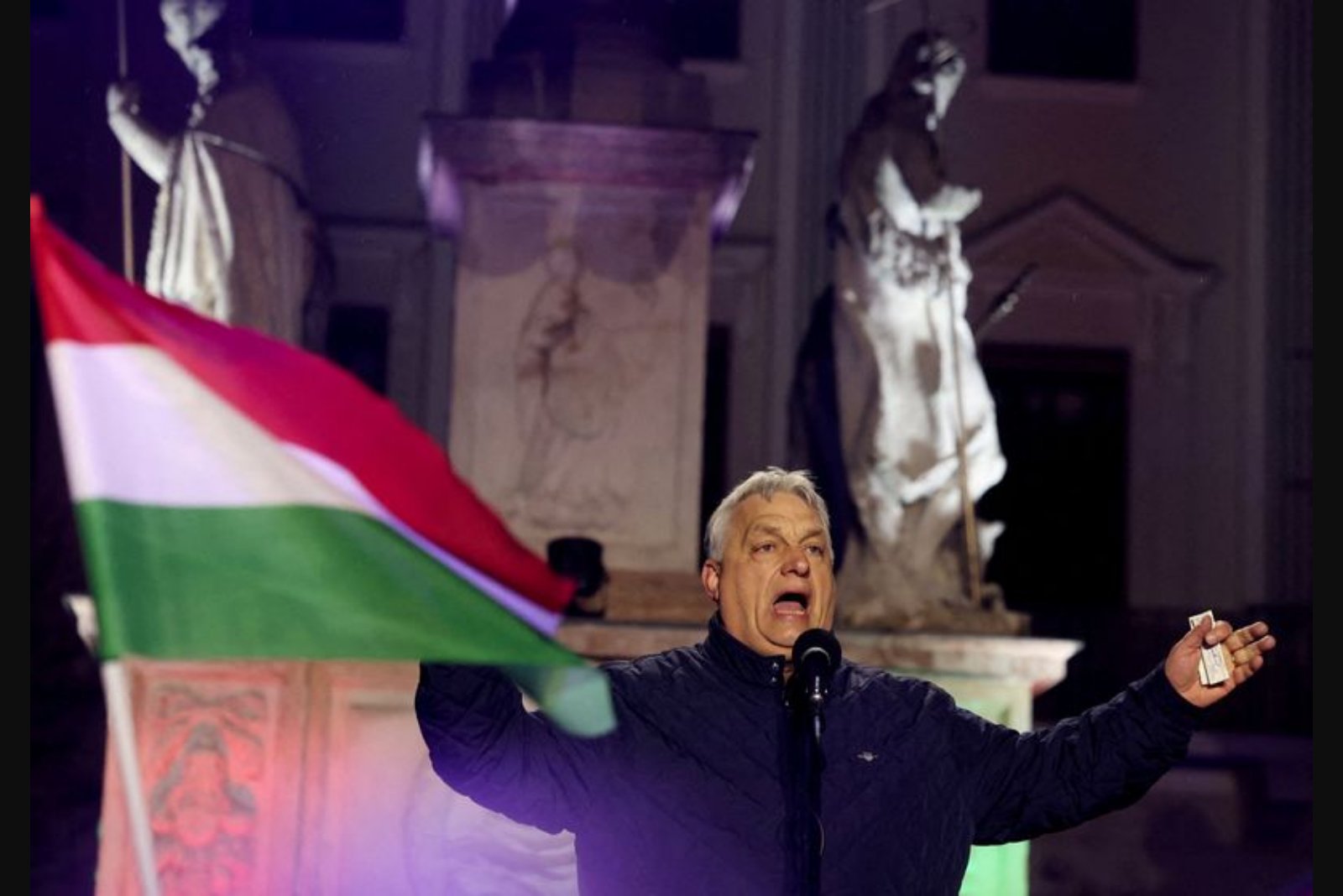
Viktor Orban, who has been Hungary’s dominant political figure since 2010, faces a real threat to his 16-year hold on power as voters head to the polls. Polling data ahead of the election on Sunday point to a plausible victory for the opposition, a development that many within Hungary see as a potential turning point in the country’s relationship with the European Union and broader geopolitics.
Orban has consolidated authority over more than a decade and a half by shrinking the space for independent media and civil liberties, promoting what he calls an "illiberal democracy." That approach has won him admirers on Europe’s far right and among supporters of U.S. President Donald Trump’s Make America Great Again movement. He has also drawn public support from the Kremlin, an alignment that has provoked scrutiny and controversy.
Yet the domestic environment that helped sustain Orban’s rule has shifted. The country has endured three years of economic stagnation and rapidly rising living costs, and critics point to the enrichment of business figures close to the administration as a driver of voter anger. In addition, press reports alleging government collusion with Moscow have further damaged the governing party’s standing among parts of the electorate.
Into that environment has stepped Peter Magyar, a 45-year-old former loyalist of Orban who now leads the centre-right Tisza party. Magyar has tapped into public discontent with promises to tackle corruption, unfreeze billions of euros in EU funds Hungary currently does not have access to, and increase taxes on the wealthiest citizens. He has also vowed to address the country’s deteriorating healthcare system.
"Just a few days and we will see a change of regime," Magyar said at a rally in the town of Baja, casting the vote as a struggle over whether Hungary will remain part of the European mainstream or move further toward authoritarian alignment. He framed the contest as existential for Hungary’s standing in Europe, saying, "This is a very last chance... to prevent our country being a Russian puppet state... Let’s not allow Fidesz... to lead Hungary out of the EU."
Orban, 62, has countered by insisting that his goal is reforming the EU from within rather than withdrawing from the bloc. He has sought to present the vote in stark terms, describing it as a choice between "war or peace" and accusing opponents of risking entanglement in the conflict raging in Ukraine. Tisza has rejected that portrayal.
Foreign reactions have underscored the broader significance attributed to the contest. The Trump administration gave visible backing to Orban this week, with a visit from U.S. Vice President JD Vance who criticised what he called "disgraceful" interference from EU institutions in Hungary’s electoral process. The European Commission pushed back, asserting that elections are solely the decision of citizens. Moscow also signalled concern about the race, with Kremlin spokesman Dmitry Peskov saying, "many forces in Europe, many forces in Brussels, would not like Orban to win the elections again."
Observers highlight several factors that sustain uncertainty about the outcome. A significant share of voters remained undecided in the days before the ballot. Recent changes to the electoral map are widely understood to favour Orban’s Fidesz party. In addition, a large number of ethnic Hungarians living in neighbouring countries tend to support the ruling party, a dynamic that could bolster Fidesz’s prospects at the ballot box.
Political analysts warn that the results could range widely. One potential scenario is a Tisza supermajority that would allow constitutional changes. At the other extreme, Fidesz could retain a majority in the 199-seat parliament. "Anything from a Tisza supermajority - able to change the constitution - to a Fidesz majority remains possible," analysts say.
For some outside observers, the stakes are substantial. Gregoire Roos, director of the Europe, Russia and Eurasia Programmes at Chatham House, said, "This is one of the most momentous elections in Europe and for Europe in many years." He noted that Moscow has valued Hungary as a difficult interlocutor within the EU because of its energy links to Russia and its unusually hardline stance toward Ukraine among EU member states. Roos added that in the United States Hungary has attracted attention as "a laboratory of sovereigntist politics."
Within Brussels, Hungary’s record has been a sore point. The government has criticised EU sanctions on Russia and remains heavily dependent on Russian oil and gas. Citing a dispute with Kyiv over a war-damaged oil pipeline, Orban has blocked an EU loan to Ukraine that was agreed in December, a move that marked the latest public conflict with EU institutions.
Smaller parties could also play a decisive role. The far-right Our Homeland party hopes to increase its vote enough to become a kingmaker, potentially enabling Orban to remain the dominant power even if his party loses ground.
Analysts caution that undoing the legal and institutional changes Orban’s government put in place would be complex. Mario Bikarski, Senior Europe Analyst at risk intelligence firm Verisk Maplecroft, noted that if a new government wins only a simple parliamentary majority it would face a difficult task reversing reforms enacted under a constitutional majority. He warned this could create "an environment of persistent legislative blockade and policy uncertainty."
Investors appear to be weighing the consequences of the vote. Some view a change of government as potentially positive for Hungary’s economic outlook. As Holger Schmieding, chief economist at Berenberg, wrote in a note, "An end to the Orban regime would provide a major boost to the Hungarian economy." He added that such an outcome could remove a major barrier to deeper cooperation with European partners and could clear the way for tougher sanctions on Russia.
Contextual note: Hungary has a population of 9.6 million and a 199-seat parliament. The election comes after three years of economic stagnation and rising living costs, and it follows media reports alleging government collusion with Moscow.