
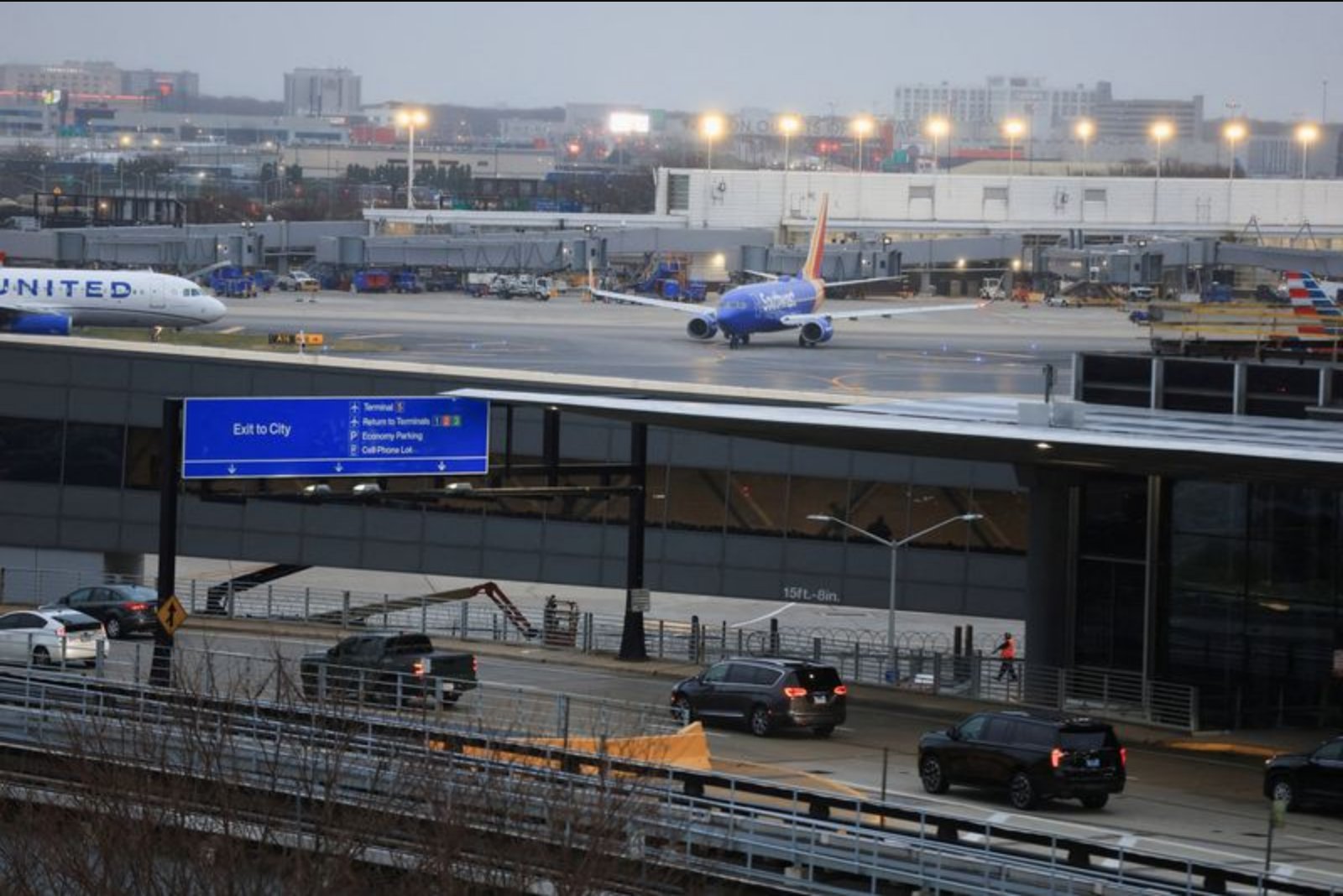
Chicago has emerged as the priciest U.S. market for jet fuel, with regional wholesale prices exceeding $5 per gallon as of early April. Industry observers say a combination of supply interruptions connected to the Iran war and pre-planned refinery maintenance in the Midwest has tightened available volumes.
Global energy consumers have seen higher costs after disruptions to flows linked to Iran's blockade of the Strait of Hormuz, a key export route for Middle Eastern crude. Those supply disruptions have pressured jet fuel availability, prompting airlines to raise fares and reduce flight capacity because of shortages of jet fuel.
GasBuddy analyst Patrick De Haan noted that Chicago has been particularly affected by the overlap of geopolitical disruption and local refinery outages, pushing spot jet fuel past the $5-a-gallon mark in the regional wholesale market. He said that prior to the Iran war, Chicago spot jet fuel traded around $2.47 a gallon.
The surge in Chicago stands in contrast to other U.S. spot markets that have seen large but less extreme price moves. De Haan reported New York Harbor jet fuel at $4.85 per gallon on Tuesday, compared with about $2.51 before the Iran war. The U.S. Gulf Coast spot jet fuel price rose to $4.86 per gallon from roughly $2.39 prior to those disruptions.
Part of the Midwest pressure stems from routine but sizable refinery turnarounds. Industry monitor IIR Energy reported that Phillips 66 took the crude unit and several other components offline at its Wood River refinery in Illinois at the end of February for a 45-day maintenance period. That refinery has a crude processing capacity of 356,000 barrels per day.
Marathon Petroleum's Robinson refinery in Illinois, with capacity of 253,000 barrels per day, also began planned maintenance in mid-March, with units expected to remain offline until mid-May, according to IIR Energy.
IIR's vice president of energy intelligence, Hillary Stevenson, said that Midwest refinery outages averaged 398,000 barrels per day for the week ending April 3, the highest average outage level among U.S. refining regions. Those elevated outage levels have contributed to tighter regional product balances.
Analysts say these refinery disruptions are affecting more than jet fuel. GasBuddy's De Haan pointed to sharp increases in spot trading for other refined products that are likely to filter through to end consumers.
Market participants reported a notable move in diesel pricing in the Chicago spot market: cash differentials jumped by 25 cents a gallon, bringing Chicago diesel to trade at a 5-cent a gallon discount to the ultra-low sulfur diesel futures benchmark on Tuesday. These shifts in cash markets signal wider stress across refined-distillate supplies in the region.
Chicago's aviation hub status — with O'Hare International Airport among the world's busiest airports — means local jet fuel price pressure has potential operational consequences for carriers that rely on the region for significant flight activity. The combination of international shipping disruptions and concentrated regional refinery maintenance has produced an unusual convergence of factors tightening supply and elevating prices in the Midwest.
The situation highlights how concurrent geopolitical events and scheduled industrial maintenance can interact to amplify commodity price moves in a specific region. Officials and market participants will be watching refinery restart schedules and ongoing global shipping developments for signals on how quickly supply balances might ease.