
Iraq could resume crude oil exports to near pre-conflict levels - about 3.4 million barrels per day - within seven days if the Iran war ends and the Strait of Hormuz is reopened, the head of the state-run Basra Oil Company said.
Bassem Abdul Karim told an interviewer that Tehran has so far provided only verbal assurances that would permit Iraqi tankers to transit the Strait. "We have not received any formal documents regarding permission for Iraqi tankers to pass," he said.
Abdul Karim said production from the country’s southern oilfields currently stands at roughly 900,000 barrels per day. He added that, should hostilities cease and guaranteed safe passage be confirmed, exports could be raised to 3.4 million bpd within a week.
Impact of the Strait of Hormuz disruption
The Strait of Hormuz is typically the route for about one fifth of global oil and LNG flows. The effective closure of this key waterway following U.S.-Israeli attacks on Iran at the end of February has had a pronounced effect on Gulf producers. Among them, Iraq has suffered the largest drop in oil revenue because it lacks alternative shipment routes, the Basra Oil Company chief said.
Last month Iraqi oil production plunged by about 80% to around 800,000 barrels per day as storage tanks filled and exports were sharply curtailed, Abdul Karim said. With limited outlets for crude, operators scaled back output across major southern fields.
Production from the Rumaila field dropped to around 400,000 bpd, down from about 1.35 million bpd before the conflict. At the Zubair field, output was about 300,000 bpd, a decrease of 340,000 bpd relative to pre-war levels, Abdul Karim said.
Production across Iraq’s fields was about 4.3 million bpd before the conflict, a level that, Abdul Karim said, should leave sufficient capacity to export 3.4 million bpd even after allowing for any war-related damage.
Gas output and domestic supplies
Gas production in Basra has also fallen, the Basra Oil Company head said. Output from fields in the south is now roughly 700 million standard cubic feet per day, down from about 1.1 billion standard cubic feet per day prior to the conflict, largely reflecting the lower oil production that drives associated gas volumes.
To meet domestic refinery requirements, the company is redirecting crude northward. BOC is sending about 400,000 bpd to northern Iraq - roughly 150,000 bpd by truck and about 250,000 bpd via a domestic pipeline - to supply refineries with demand around 500,000 bpd.
Production from the northern Kirkuk fields is running at about 380,000 bpd, Abdul Karim said.
Security incidents and operational setbacks
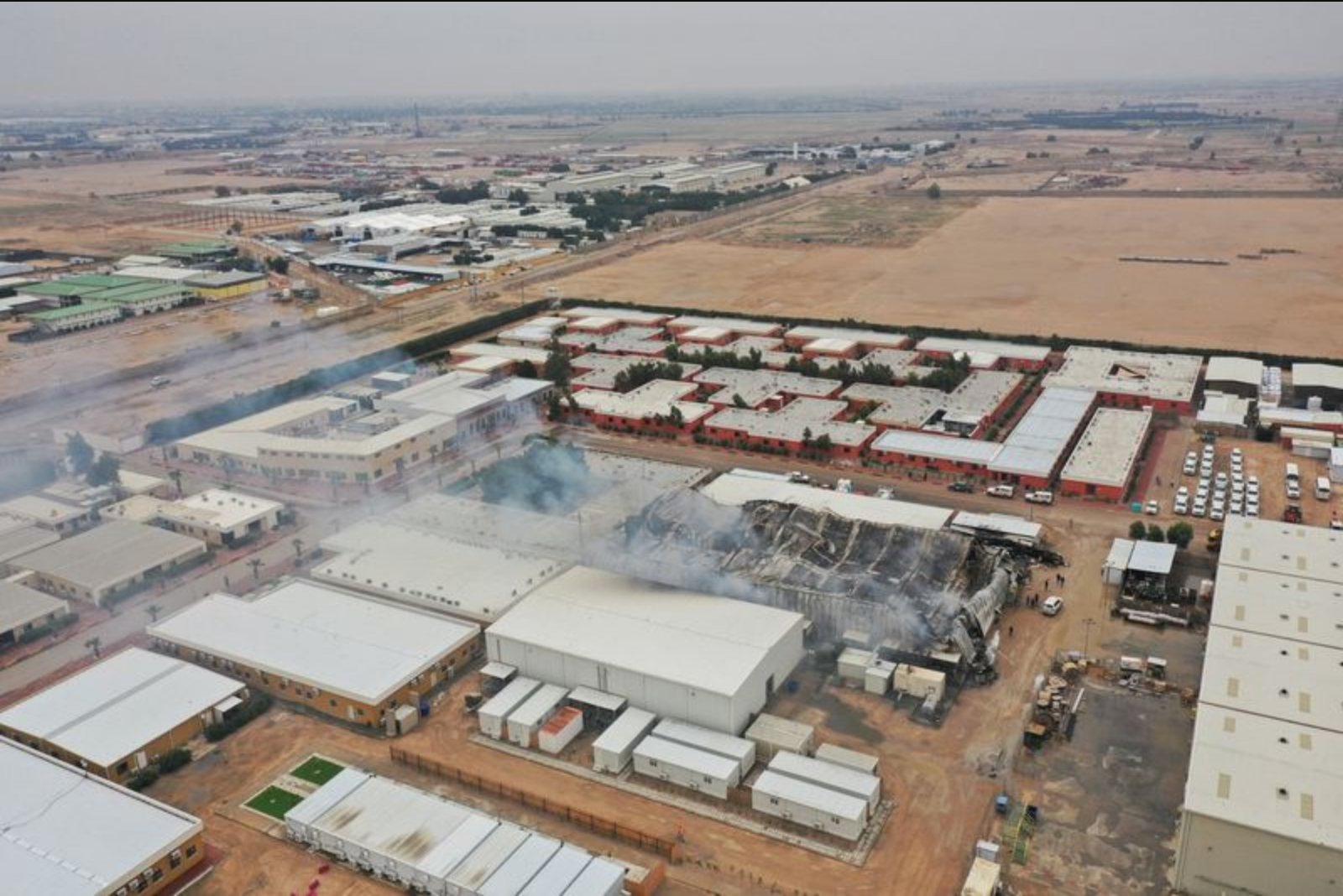
Abdul Karim said drone strikes on oil facilities had inflicted "major losses to the continuity of production and oil operations," noting that both foreign and Iraqi service companies had been targeted. A two-drone attack that struck the Rumaila oilfield wounded three Iraqi workers, according to security and energy sources cited to the interviewer.
The Basra Oil Company chief said the attack on the northern portion of the Rumaila field impacted sites used by U.S. oilfield service firms Schlumberger and Baker Hughes, sparking a fire that was later brought under control. Neither Schlumberger nor Baker Hughes immediately responded to requests for comment.
Several smaller fields are being operated at reduced levels to maintain production of associated gas, which is used for domestic power generation. In some cases, shutdowns at other sites have been used as an opportunity to carry out maintenance work, Abdul Karim added.
Political and military statements
In parallel with these operational updates, U.S. President Donald Trump has issued public warnings toward Tehran, saying he would rain "hell" on Iran unless it reached an agreement by the end of Tuesday that would permit traffic to move through the Strait of Hormuz.
Outlook
Abdul Karim framed the situation as one in which a rapid restoration of exports is technically achievable if the conflict ends and safe passage through the Strait is formally guaranteed. Until such a resolution, Iraq’s export capacity remains constrained by filled storage, curtailed field output and periodic security incidents that have disrupted operations and services.
The head of Basra Oil Company reiterated that formal, documented permission for Iraqi tankers to transit the Strait has not yet been provided by Iran, and that verbal assurances alone do not constitute the clear, actionable authorization needed to resume full export flows.
Given the current operational posture, Iraq is balancing limited external sales with internal needs for refinery feedstock and domestic power generation, while also managing repairs and maintenance where production has been paused.